Ultimate 2025 Guide to Trezor.io/start — Setting Up and Securing Your Trezor Hardware Wallet
Cryptocurrencies continue to revolutionize the world of finance, and as adoption grows, so does the need for strong security. While blockchain networks are highly secure, the biggest vulnerability is often the person holding the private keys. That’s where hardware wallets become essential — and leading the way in crypto security is the Trezor hardware wallet, accessible for setup via Trezor.io/start.
Whether you are a beginner to cryptocurrency or an experienced investor looking to strengthen asset protection, this guide explains everything you need to know about Trezor.io/start, how to set up your Trezor wallet, and how to use it safely in 2025 and beyond.
What Is Trezor.io/start?
Trezor.io/start is the official onboarding and setup portal for Trezor hardware wallets. It guides users through:
Downloading Trezor Suite (Trezor’s official management interface)
Installing firmware on the device
Creating and backing up a recovery seed
Adding and managing cryptocurrencies
Enabling security protections such as PINs and passphrases
If you have purchased a Trezor Model One or Trezor Model T, Trezor.io/start is the only authentic and recommended starting point.
Why Use a Trezor Hardware Wallet?
Unlike software wallets or exchange accounts, a Trezor wallet keeps your crypto offline, away from hackers. Some of the major benefits include:
1. True Self-Custody
Crypto exchanges can freeze accounts, shut down, get hacked, or suffer bankruptcy. With Trezor, the private keys never leave the device — you alone own your crypto.
2. Immune to Remote Hacking
Hardware wallets are physically isolated from the internet. Even if your computer has malware, your private keys remain unreachable.
3. Support for Thousands of Coins
Trezor supports Bitcoin, Ethereum, Litecoin, Dogecoin, Cardano, Polygon, XRP (through third-party apps), and many more.
4. Open-Source Software
Trezor is the first and only major hardware wallet fully open-source, meaning the security is continuously peer-reviewed.
5. Built-in Password and Passphrase Tools
Trezor can also secure logins, manage crypto-related passwords, and add passphrases for maximum protection.
Before You Begin — Safety Checklist
Before visiting Trezor.io/start, make sure:
Safety RequirementWhy It MattersWallet purchased from official store or authorized resellerPrevents tamperingBox was sealed and device unmarkedSigns of authenticityYou are connected to Trezor.io/start only (not Google ads or imitation sites)Prevents phishingNever enter recovery seed on a website, mobile app, or keyboardSeeds must stay offline
If a website ever asks you to type your recovery seed — it is a scam. The correct process shows seed only on the Trezor device screen, never on your computer.
Step-by-Step Setup at Trezor.io/start
Step 1 — Visit the official setup page
Open a browser and go to:
🔗 Trezor.io/start
Choose your device model: Trezor Model One or Trezor Model T.
Step 2 — Download and install Trezor Suite
Trezor Suite is available for Windows, macOS, and Linux. It can also be used in a browser, but the desktop app is more secure.
After installation, launch the application.
Step 3 — Connect your Trezor hardware wallet
Use the USB cable shipped with the wallet
Do NOT use third-party cables, as some can leak data or underpower the device
Once connected, Trezor Suite will detect your hardware.
Step 4 — Install the firmware
Brand-new Trezor wallets ship without firmware. This ensures the software loaded has not been tampered with.
Click Install Firmware and wait until the device restarts.
Step 5 — Create a new wallet
Two options appear:
Create New Wallet (recommended)
Recover Wallet (only if you’re restoring an old wallet)
For new users, select Create New Wallet.
Step 6 — Backup your recovery seed
Your device will generate a 12-, 18-, or 24-word seed phrase. These words are the only backup of your crypto.
Important rules:
Write the seed on paper or stainless-steel backup plates
Never photograph, scan, or type it into a phone or computer
Never tell anyone the seed phrase
If someone has your seed, they have your crypto.
Step 7 — Set a PIN
A PIN prevents unauthorized physical access to the device.
Step 8 — Enable a passphrase (optional but highly recommended)
A passphrase is an extra custom word that adds a second layer of protection. Without it, even with the seed phrase, a thief cannot access your funds.
Step 9 — Add cryptocurrencies
You can now add and manage wallets for:
Bitcoin
Ethereum and ERC-20 tokens
BNB Smart Chain and BEP-20 tokens
And many others
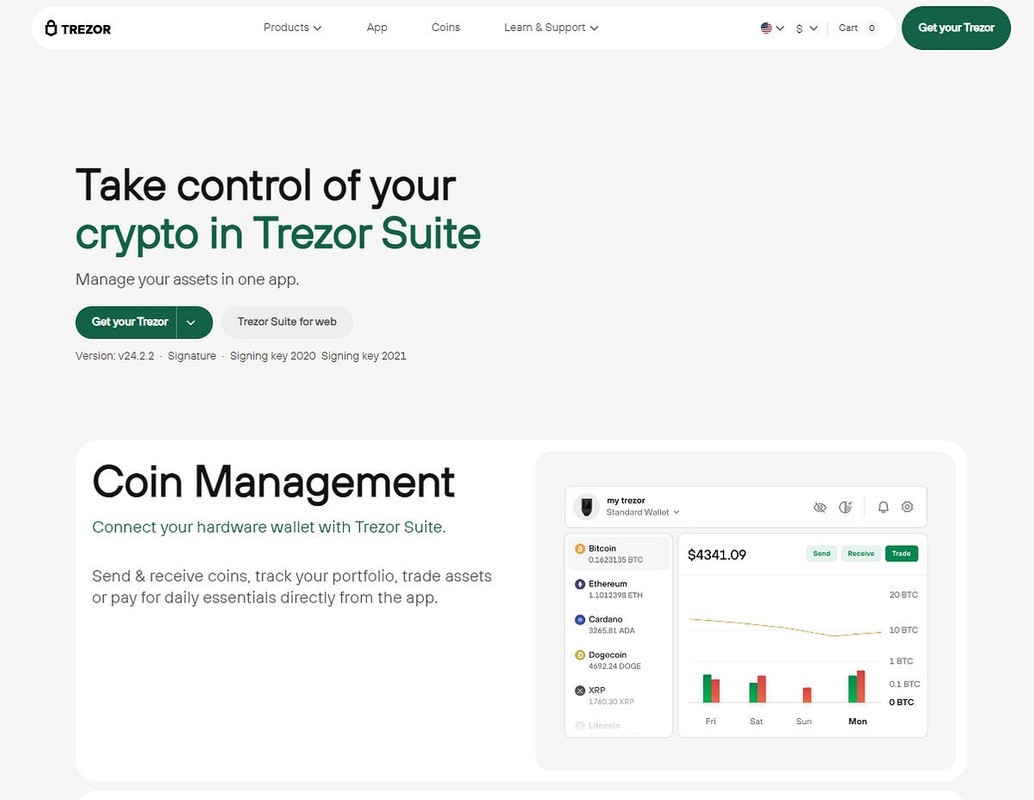
Trezor Suite allows you to:
Receive coins to your wallet
Send crypto safely
Track portfolio balances
Exchange or buy assets through integrated services
Best Security Practices for Trezor Users
Good PracticeReasonAlways check the address on the Trezor screen before confirmingPrevents malware from swapping addressesUse a passphraseMakes wallets mathematically uncrackableKeep seed phrase offlineStops digital theftStore backups in two separate secure locationsAvoids loss due to fire/theftKeep firmware updatedEnsures latest security improvements
Security Negligence to Avoid
Never store seed phrase in email, cloud storage, notes apps, or screenshots
Never allow anyone to “help set up” your Trezor
Never insert seed phrase into websites or mobile apps
If you follow these rules, a Trezor wallet provides one of the highest levels of crypto security available today.
Trezor Suite Features Worth Exploring
Beyond basic crypto storage, Trezor Suite offers:
✔ Coin Control
Lets advanced users choose specific UTXOs when sending Bitcoin — useful for privacy and transaction fee optimization.
✔ Built-in Tor Support
Routes traffic through the Tor network for increased privacy and untraceability.
✔ NFT Storage (via third-party apps)
Trezor supports NFTs on Ethereum and other chains using integrated apps.
✔ Portfolio Tracking
Visual performance chart across multiple assets.
✔ Exchange & Buy Tools
Users can purchase or swap crypto without leaving the Suite interface.
Troubleshooting for Trezor.io/start Users
IssueSolutionDevice not detectedTry another USB cable or port; use the original cableStuck on “Waiting for Bootloader”Restart the device and reconnectFirmware hash mismatch warningDisconnect immediately — only install firmware from Trezor SuiteForgot PINYou must reset device and recover using seed phraseLost seed phraseFunds cannot be recovered — Trezor cannot restore it
Trezor Model One vs. Trezor Model T — Which to Choose?
FeatureModel OneModel TPriceBudget-friendlyPremiumScreenTwo buttons, smaller displayFull-color touchscreenSupported coinsMost major assetsAll assets including advanced chainsIdeal forBeginnersPower users & high-value holdings
Both wallets use the same gold-standard security model — the difference lies in convenience and asset coverage.
Why Hardware Wallets Are Essential in 2025
Crypto investment has matured, but cyber threats have evolved as well:
Phishing attacks are more sophisticated
Exchange collapses and thefts still occur
Malware targeting browser wallets is increasing
Using a hardware wallet means:
No website or hacker ever sees your private keys
The only place crypto can be accessed from is your Trezor device
In a world where digital assets represent financial freedom, Trezor.io/start is the first step toward true ownership and security.
Final Thoughts
Trezor hardware wallets remain one of the most trusted and secure solutions in the crypto ecosystem. Whether you’re storing Bitcoin for the future, trading altcoins, or safeguarding NFTs, Trezor.io/start provides a smooth and professional onboarding experience with powerful protection against cyber threats.
If you value security, privacy, and full control of your crypto — not to mention peace of mind — there is no substitute for a hardware wallet. And when it comes to reliability, transparency, and open-source security, Trezor continues to lead the industry.